
ในยุคที่การพัฒนาแอปพลิเคชันเปลี่ยนไปสู่แนวทาง Reactive มากขึ้น Spring WebFlux กลายเป็นตัวเลือกสำคัญของนักพัฒนา Java ที่ต้องการรองรับการประมวลผลแบบ Asynchronous และ Non-Blocking ซึ่งมีประโยชน์มากเมื่อรับโหลดจำนวนมาก
บทความนี้จะพาคุณไปเรียนรู้การจัดการข้อผิดพลาด (Error Handling) ใน Spring WebFlux โดยใช้แนวทางแบบ Functional ที่ใช้ร่วมกับ RouterFunction และ HandlerFunction ซึ่งต่างจากแนว MVC แบบเดิม
🔍 ทำไมต้องจัดการ Error แบบ Functional?
- เหมาะสำหรับ WebFlux Routing ที่ใช้ RouterFunction
- รองรับ Mono และ Flux ได้อย่างสมบูรณ์
- แยกการจัดการ Error ออกจาก logic หลัก
- รองรับรูปแบบ JSON Response ที่กำหนดเอง
🧱 โครงสร้าง Router และ Handler
@Configuration
public class RouterConfig {
  @Bean
  public RouterFunction<ServerResponse> route(MyHandler handler) {
    return RouterFunctions.route()
        .GET("/api/hello", handler::hello)
        .GET("/api/user/{id}", handler::getUser)
        .build();
  }
}
@Component
public class MyHandler {
  public Mono<ServerResponse> hello(ServerRequest request) {
    return ServerResponse.ok().bodyValue("Hello WebFlux!");
  }

  public Mono<ServerResponse> getUser(ServerRequest request) {
    String id = request.pathVariable("id");
    if (id.equals("0")) {
      throw new NotFoundException("User ID not found");
    }
    return ServerResponse.ok().bodyValue("User ID: " + id);
  }
}
🛑 สร้าง Custom Exception
public class NotFoundException extends RuntimeException {
  public NotFoundException(String message) {
    super(message);
  }
}
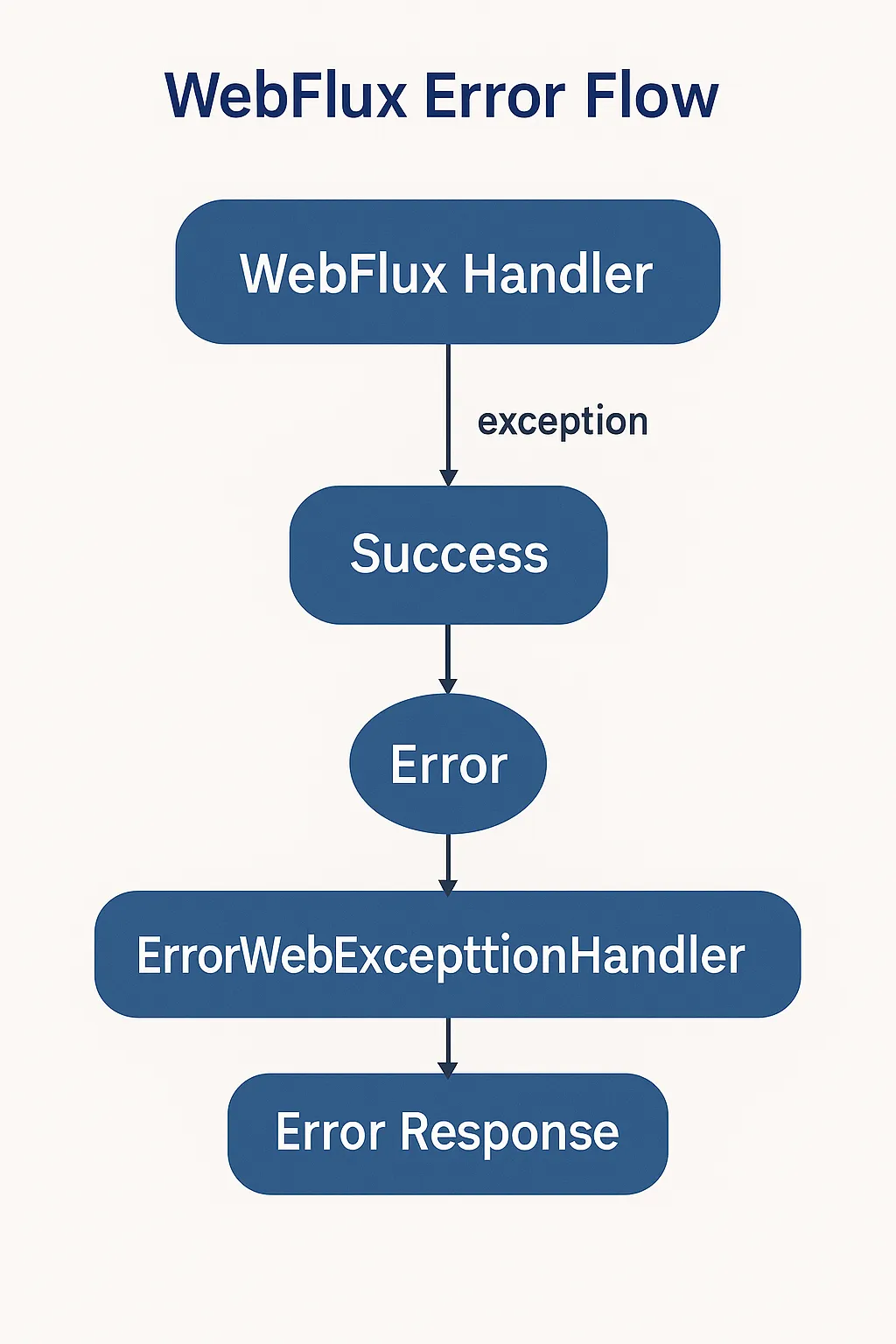
⚙️ สร้าง Global Error Handler
@Component
@Order(-2)
public class GlobalErrorHandler extends AbstractErrorWebExceptionHandler {

  public GlobalErrorHandler(ErrorAttributes errorAttributes,
                            ApplicationContext applicationContext,
                            ServerCodecConfigurer configurer) {
    super(errorAttributes, new WebProperties.Resources(), applicationContext);
    super.setMessageReaders(configurer.getReaders());
    super.setMessageWriters(configurer.getWriters());
  }

  @Override
  protected RouterFunction<ServerResponse> getRoutingFunction(ErrorAttributes errorAttributes) {
    return RouterFunctions.route(RequestPredicates.all(), this::renderErrorResponse);
  }

  private Mono<ServerResponse> renderErrorResponse(ServerRequest request) {
    Map<String, Object> errorProps = getErrorAttributes(request, ErrorAttributeOptions.defaults());
    return ServerResponse
        .status((int) errorProps.getOrDefault("status", 500))
        .contentType(MediaType.APPLICATION_JSON)
        .bodyValue(Map.of(
            "error", errorProps.get("error"),
            "message", errorProps.get("message"),
            "path", errorProps.get("path"),
            "status", errorProps.get("status")
        ));
  }
}
✨ Custom ErrorAttributes (Optional)
@Component
public class CustomErrorAttributes extends DefaultErrorAttributes {
  @Override
  public Map<String, Object> getErrorAttributes(ServerRequest request, ErrorAttributeOptions options) {
    Throwable error = getError(request);
    return Map.of(
        "message", error.getMessage(),
        "error", error.getClass().getSimpleName(),
        "timestamp", Instant.now().toString(),
        "status", 500
    );
  }
}
💬 ตัวอย่าง Response เมื่อเกิด Error
{
  "error": "NotFoundException",
  "message": "User ID not found",
  "status": 500,
  "path": "/api/user/0"
}
🌐 ใช้ร่วมกับ WebClient
webClient.get()
    .uri("/external-api")
    .retrieve()
    .onStatus(HttpStatus::is4xxClientError, resp ->
        Mono.error(new RuntimeException("Client error")))
    .onStatus(HttpStatus::is5xxServerError, resp ->
        Mono.error(new RuntimeException("Server error")))
    .bodyToMono(String.class);
📊 สรุปแนวทาง
- แยก Logic Error ออกจาก Handler อย่างชัดเจน
- ปรับแต่งรูปแบบ Error Response ได้ตามต้องการ
- ไม่ต้องพึ่ง @ControllerAdvice แบบใน MVC
- ทำงานร่วมกับ Mono/Flux ได้ลื่นไหล
📸 ภาพประกอบแนะนำ
- WebFlux Error Lifecycle
- GlobalErrorHandler Diagram
- Custom Error Response Flow
🔎 คำค้น SEO
Spring WebFlux Error Handling, Functional Router WebFlux, GlobalErrorWebExceptionHandler, Spring Boot Reactive Exception, Spring ErrorAttributes Custom, JSON error response Spring WebFlux, Spring WebFlux Mono Flux Error, Functional Exception Flow